


IP65 vs IP68: What Do Flashlight Water-Resistance Ratings Mean?
IP ratings appear on flashlights, outdoor electronics and tools, but the numbers are easy to misunderstand.
An IP rating does not mean a product is simply “waterproof.”
It describes how an enclosure performs against solid particles and water under defined test conditions.
For flashlight buyers, the useful question is:
What kind of water exposure was the product designed to handle?
Built for Wet-Weather Field Use
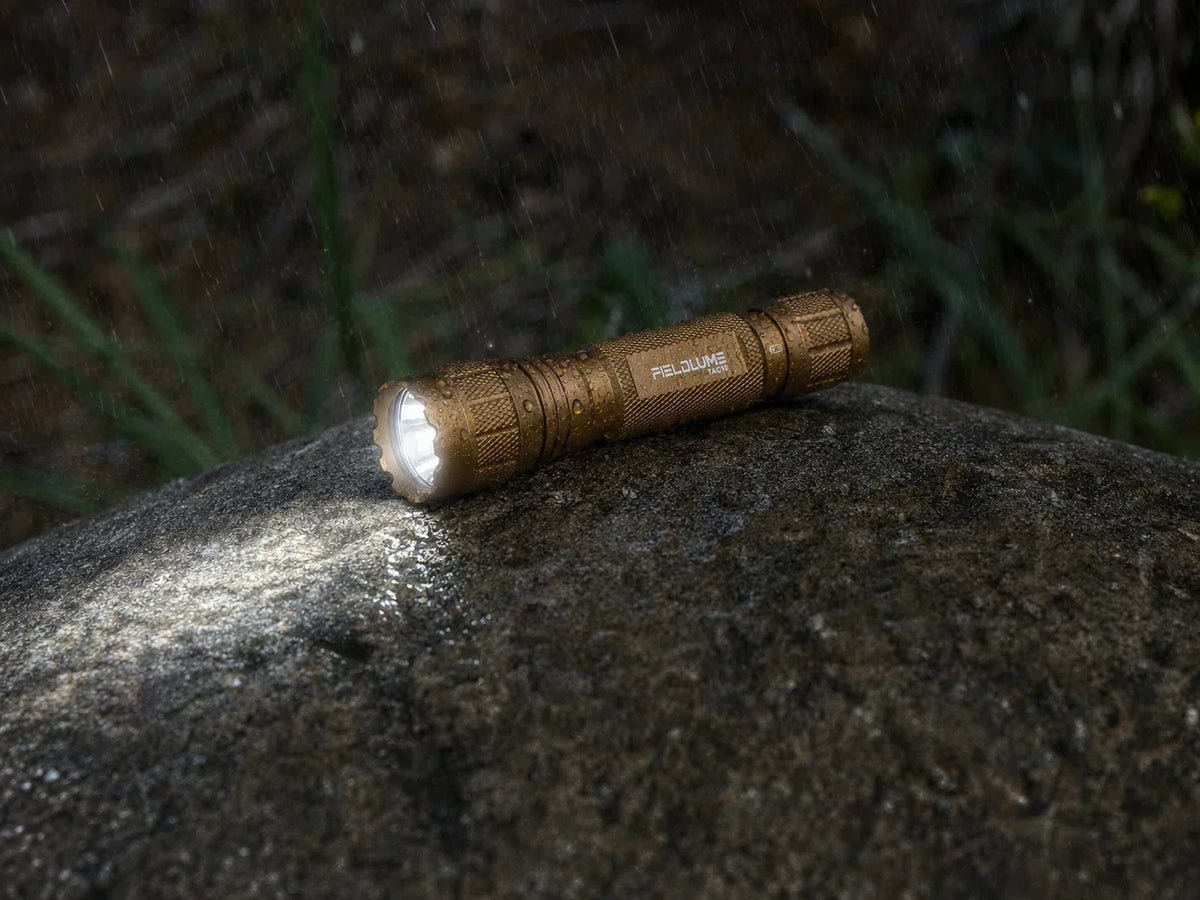
The FIELDLUME TAC10 Tan Tactical Flashlight combines a compact tactical design with IP65 water-resistant protection for rain, splashes and everyday outdoor conditions.

What Does an IP Rating Mean?
IP ratings are defined by IEC 60529.
The two digits describe different things:
First digit = protection against solid objects and dust
Second digit = protection against water
For example, in IP65:
-
6= dust-tight; -
5= protected against water jets.
The 6 is therefore about dust. The 5 is about water.
What Does IP65 Mean?
An IP65 enclosure is dust-tight and protected against water jets.
For a flashlight, this can be suitable for conditions such as:
- rain;
- wet hands;
- splashes;
- dusty outdoor environments;
- normal camping, work and EDC use.
IP65 does not mean the flashlight is designed for intentional underwater use.
What About IP67 and IP68?
The water-protection number changes the type of exposure being tested.
IP67 covers temporary immersion under defined test conditions.
IP68 covers continuous immersion under conditions specified for the particular product.
One detail is especially important:
IP68 does not define one universal depth or duration.
The immersion conditions must be specified for the product.
So seeing IP68 alone should not be interpreted as “safe underwater at any depth for any amount of time.”
Is IP68 Always Better Than IP65?
Not in every practical sense.
IP65 and IP68 involve different water tests.
Under IEC 60529, an immersion rating such as IPX7 or IPX8 does not automatically establish compliance with the water-jet tests represented by IPX5 or IPX6 unless the product carries the relevant combined ratings.
That is why the right question is not simply:
“Which number is higher?”
Instead ask:
“What type of water exposure do I actually expect?”
Which Rating Do You Need?
For normal EDC, camping, work or outdoor use, resistance to rain, dust and splashing may be more relevant than intentional immersion.
For equipment likely to be submerged, look for a rating designed for immersion and check the manufacturer's stated depth and duration.
For specialized underwater use, choose equipment specifically designed for that purpose rather than assuming any outdoor flashlight is a dive light.
Water Resistance Also Depends on Condition
An IP rating describes the enclosure under defined test conditions.
Real-world sealing can also depend on:
- battery caps being fully tightened;
- charging-port covers being properly closed;
- O-rings and seals remaining undamaged;
- threads and sealing surfaces being clean.
A worn seal or incorrectly closed cap can reduce protection over time.
A Real-World Example: FIELDLUME TAC10 Tan
The FIELDLUME TAC10 Tan Tactical Flashlight is designed for everyday tactical and outdoor use, including conditions where rain, splashes and dust may be encountered.
Its water-resistance specification makes it a useful example of an important point:
A flashlight does not need to be designed for submersion to be suitable for wet outdoor conditions.
For patrol, camping, roadside use or general field use, resistance to rain and splashing may be more relevant than an immersion rating.
The right IP rating depends on how the flashlight is actually intended to be used.
Key Takeaway
When reading an IP rating:
6 = dust protection
5 = water jets
7 = temporary immersion
8 = continuous immersion under specified conditions
Do not treat a higher number as a universal measure of flashlight quality.
Choose the protection that matches how you will actually use the light.
Ready for Rain, Splashes and Field Use
The FIELDLUME TAC10 Tan Tactical Flashlight combines straightforward operation with water-resistant protection for everyday outdoor and tactical use.

FAQ
Is IP65 waterproof?
It is better described as water resistant. IP65 covers dust ingress and water-jet exposure, not intentional submersion.
Can I use an IP65 flashlight in the rain?
IP65 is designed for water-jet exposure, making normal rain and wet outdoor conditions consistent with its intended protection when the flashlight is correctly closed and maintained.
Does IP68 mean a flashlight can be submerged indefinitely?
No. IP68 immersion conditions are specified for the particular product, so the stated depth and duration should always be checked.
Share:
Why Do High-Lumen Flashlights Step Down?
Why Does Your Flashlight Get Hot?