


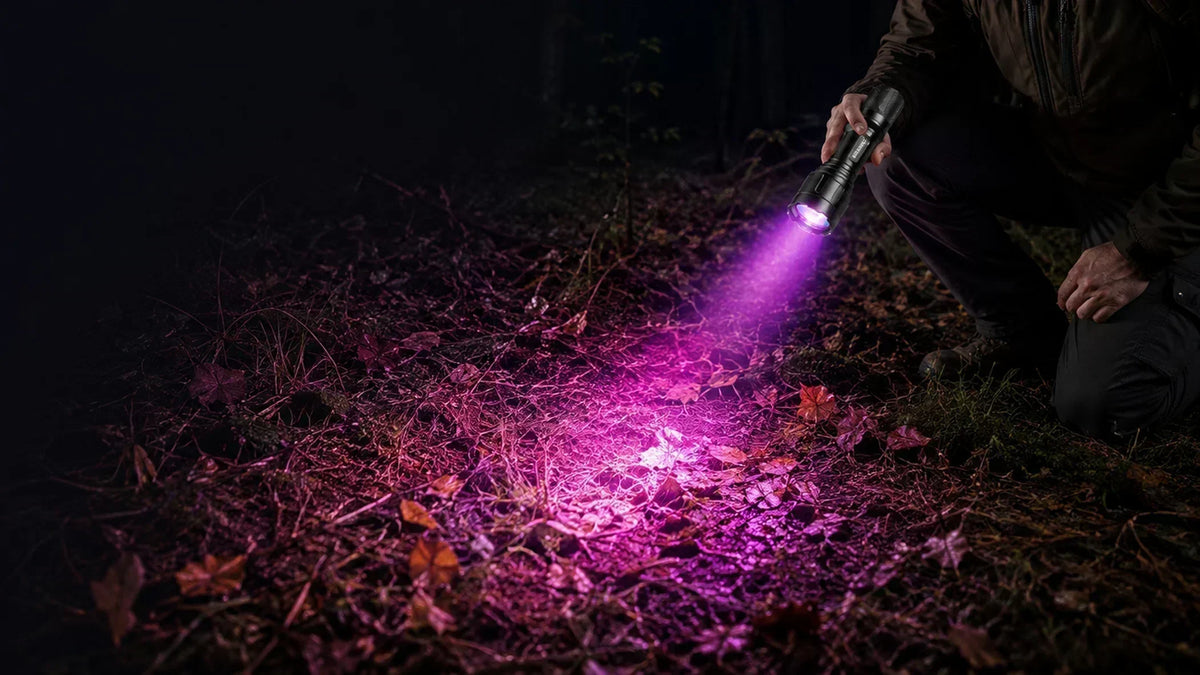
BLOOD TRACKING SERIES 01
How specialized light, optical filtering and visual contrast can help hunters read subtle trail indicators in low-light conditions.
Quick Answer
A blood tracking light is a specialized hunting flashlight designed to improve visual contrast when searching for trail indicators in low-light environments. Instead of relying on brightness alone, it may use selected wavelengths, optical filtering or multiple light sources to help certain colors stand out from leaves, vegetation, soil and other backgrounds.
It is a visual aid, not a guarantee. Surface type, moisture, ambient light and trail conditions can all affect what you see.
What Is a Blood Tracking Light?
A regular flashlight is designed to illuminate the whole scene. A blood tracking light has a more specific purpose: help the user notice subtle visual differences that may otherwise blend into the environment.
That matters in woodland and field conditions, where brown leaves, green vegetation, dark soil, bark and wet surfaces can all compete for attention. A brighter beam can make navigation easier, but it does not automatically make a small trail indicator easier to distinguish.
A simple way to think about it is this: a regular flashlight helps you see the scene; a blood tracking light is designed to help you read the scene.

How Does a Blood Tracking Light Work?
Different materials reflect and absorb light differently. By changing the spectral characteristics of the illumination, a tracking light can change how bright or dark certain colors appear relative to their surroundings.
Some tracking lights use selected LED wavelengths. Others use optical filters or multiple light sources. The goal is not simply to create a colored beam, but to improve useful visual contrast.
This is also why more lumens do not always mean better tracking performance. Beam pattern, filtering, viewing distance and the surface being examined can all matter.
No single light color should be expected to perform best on every surface or in every condition. We will compare green, red, UV and white light in Blood Tracking Series 03.

Does Blood Glow Under a Tracking Light?
Not in the dramatic way often shown on television.
Whole blood does not simply become a bright fluorescent marker when an ordinary UV flashlight is switched on. In many optical applications, visibility comes from differences in absorption and contrast rather than a strong “glow.”
Some blood components can behave differently under specific ultraviolet conditions, but that does not mean every blood trail will fluoresce clearly in the field.
A tracking light is therefore best understood as an optical aid, not a chemical detector.
When Can a Blood Tracking Light Help?
A tracking light can be useful when subtle visual clues are difficult to separate from the background, especially in low light, dense vegetation, leaf litter or mixed terrain.
Results can change with wet or dry surfaces, ambient light, distance, beam angle and background color. The light should support careful observation, not replace it.
What Should You Look For?
For a practical hunting tracking light, consider optical design, usable output, beam pattern, runtime, grip and outdoor durability. Water resistance also matters when the light may be used in rain, wet vegetation or dusty conditions.
Brightness is important, but it should not be the only specification you compare.
FIELDLUME Blood Tracking Light
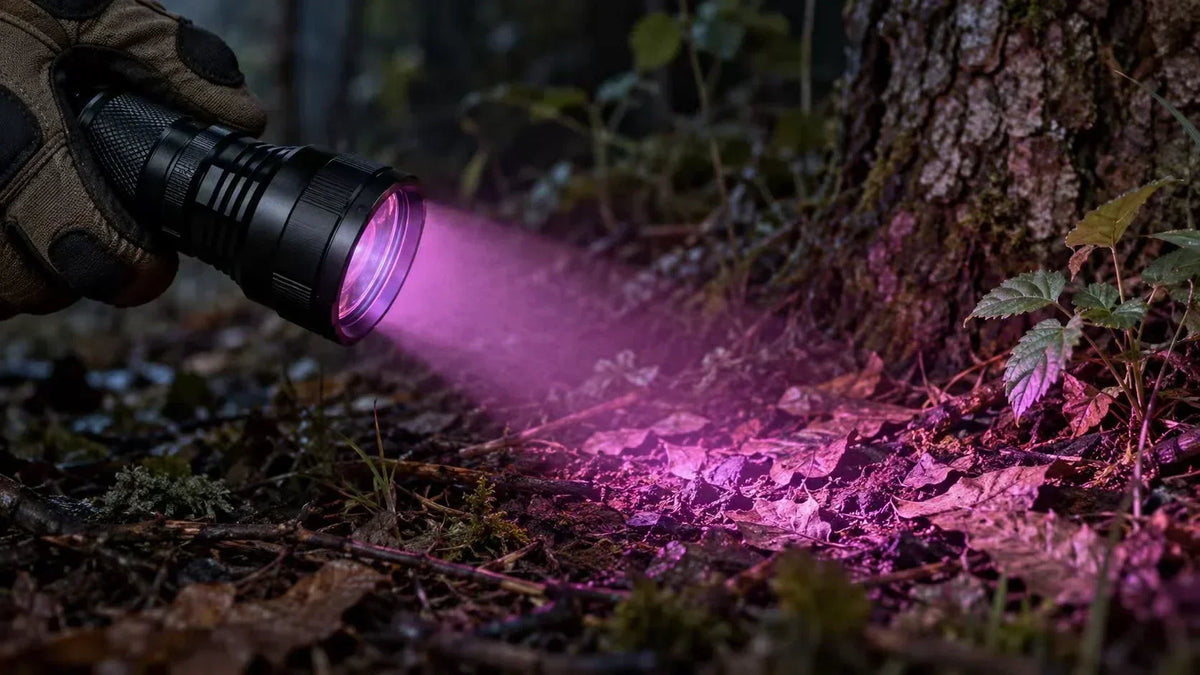
The FIELDLUME Blood Tracking Light 1800LM is designed as a dedicated low-light tracking tool, combining high output with optical filter technology in a rechargeable outdoor platform.
Its purpose is simple: give hunters another way to examine subtle trail indicators when ordinary illumination is not enough.
Explore the FIELDLUME Blood Tracking Light for full specifications and outdoor-use details.

Share: