


BLOOD TRACKING SERIES 08
Real nighttime footage can tell us something that specification sheets cannot: how a tracking light actually looks and behaves outdoors.
Quick Answer
A real-world blood tracking light field test should focus on beam visibility, useful contrast, surface response, distance and changing field conditions.
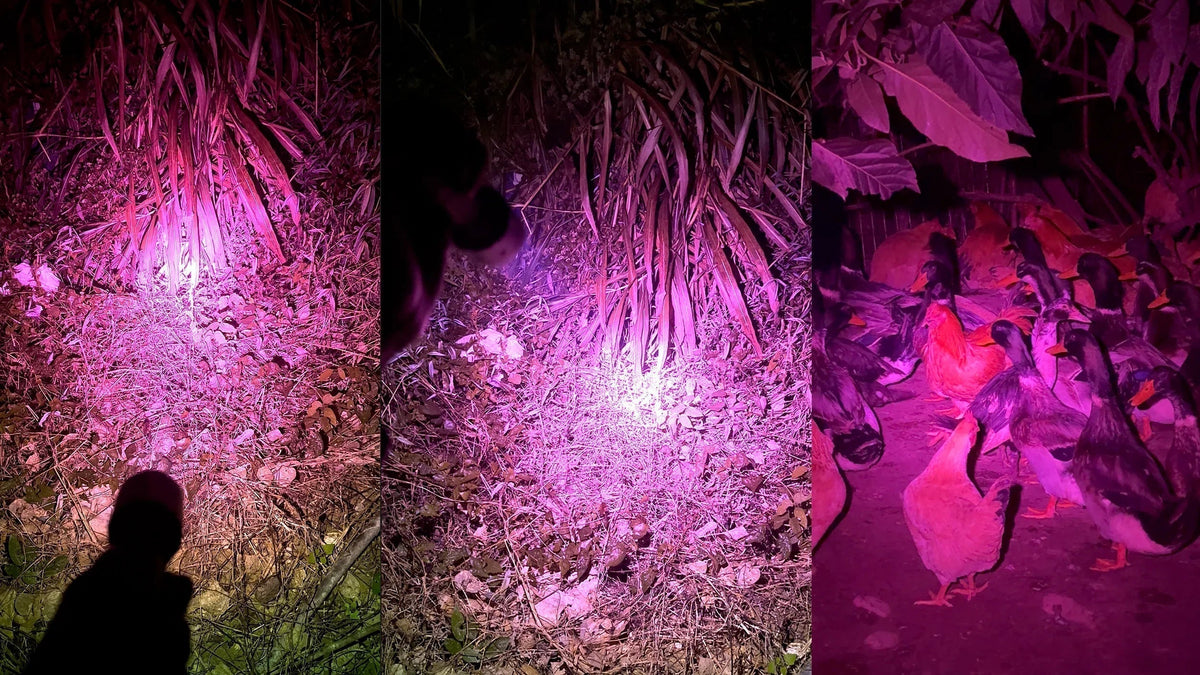
FIELDLUME nighttime footage shows that the tracking beam remains clearly visible across soil, leaves and vegetation, while the appearance of the illuminated scene changes with distance, surface type and viewing angle.
That does not make field footage a laboratory test or guarantee that every trail will become visible. It simply provides a more realistic view of how the light behaves outside.

What Did We Test?
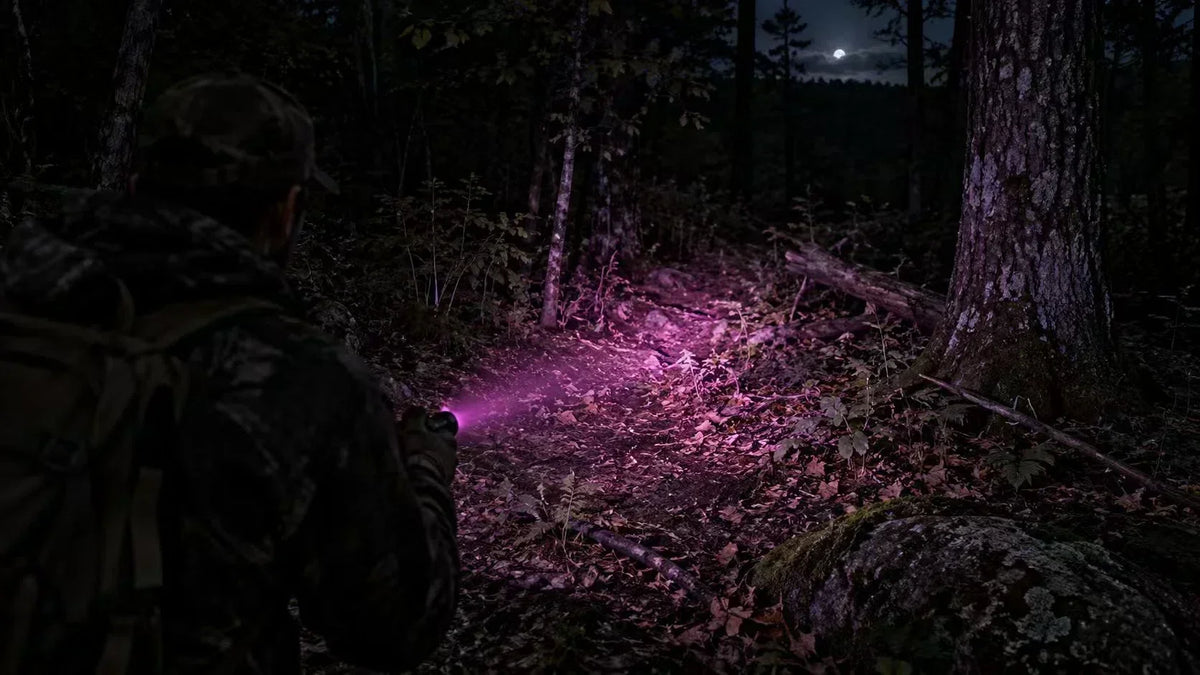
Our field footage was recorded outdoors at night across natural terrain including leaf litter, soil, vegetation and woodland surfaces.
Rather than staging a laboratory demonstration, the goal was to observe the light in the kinds of conditions where a user would actually operate it.
We looked at four practical questions:
How visible is the beam? How does the ground appear under the tracking light? What changes as distance increases? How does the result compare with normal white illumination?
What Does the Tracking Beam Look Like in the Field?
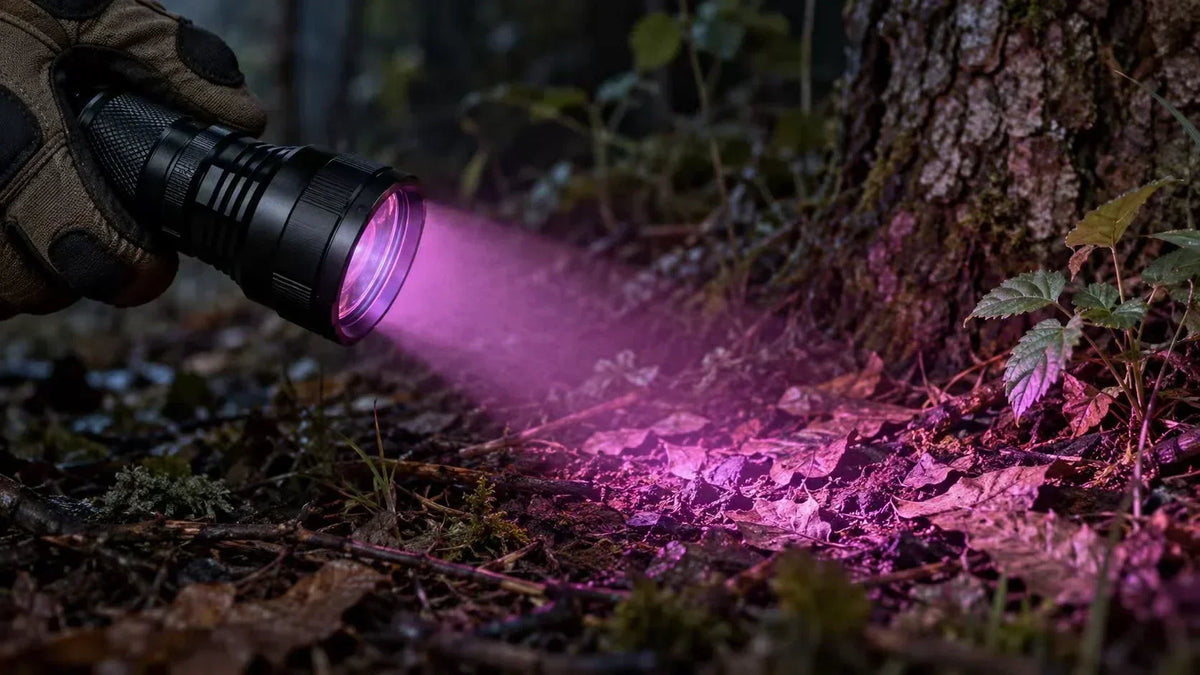
In real footage, the FIELDLUME tracking beam appears as a strong magenta / pink-purple illumination rather than ordinary white light or a simple UV-style violet beam.
At closer distances, the beam creates a clearly defined illuminated area while still allowing surface texture to remain visible.
Leaves, soil and vegetation do not all respond in exactly the same way. That variation is important because useful observation depends partly on differences between the surface and the visual clue being examined.
For the optical principle behind this, see BT-02 — How Does a Blood Tracking Light Work?
Real FIELDLUME night footage across leaf litter, soil and vegetation.
What Happens as Distance Changes?
Distance changes what the user can see.
At close range, the illuminated area shows more surface detail. At greater distance, beam reach and overall visibility become more important.
This is one reason maximum lumens alone cannot describe field usefulness. Output, beam pattern and viewing distance work together.
For a deeper explanation, see BT-07 — How Many Lumens Do You Need for Blood Tracking?
White Light vs Blood Tracking Light
White light remains extremely useful for navigation and general searching.
In side-by-side footage, white illumination shows familiar natural colors, while the blood tracking light changes the visual relationship between the surrounding surfaces.
The important point is not that one light is always better.
They provide different visual information.
That is why a regular flashlight and a specialized tracking light can complement each other rather than compete.
See BT-05 — Blood Tracking Light vs Regular Flashlight for the full comparison.
What Can Real Field Footage Prove?
Real footage can show:
- actual beam appearance,
- usable illumination at different distances,
- how terrain looks under the light,
- and how the beam behaves in genuine outdoor conditions.
But footage cannot prove that every possible trail, surface or environment will produce the same result.
Camera exposure, moisture, terrain, ambient light and surface color can all affect what appears on screen—and what a person sees in the field.
A field test is valuable because it adds real-world context, not because it removes uncertainty.
FIELDLUME B1 Blood Tracking Light
The FIELDLUME B1 Blood Tracking Light 1800LM combines a custom blood-tracking optical filter, three output levels and a replaceable 21700 rechargeable battery in an IP65 outdoor platform.
The real nighttime footage shown in this article is intended to demonstrate how the tracking beam appears and behaves in field conditions—not to claim guaranteed detection.
Share: