


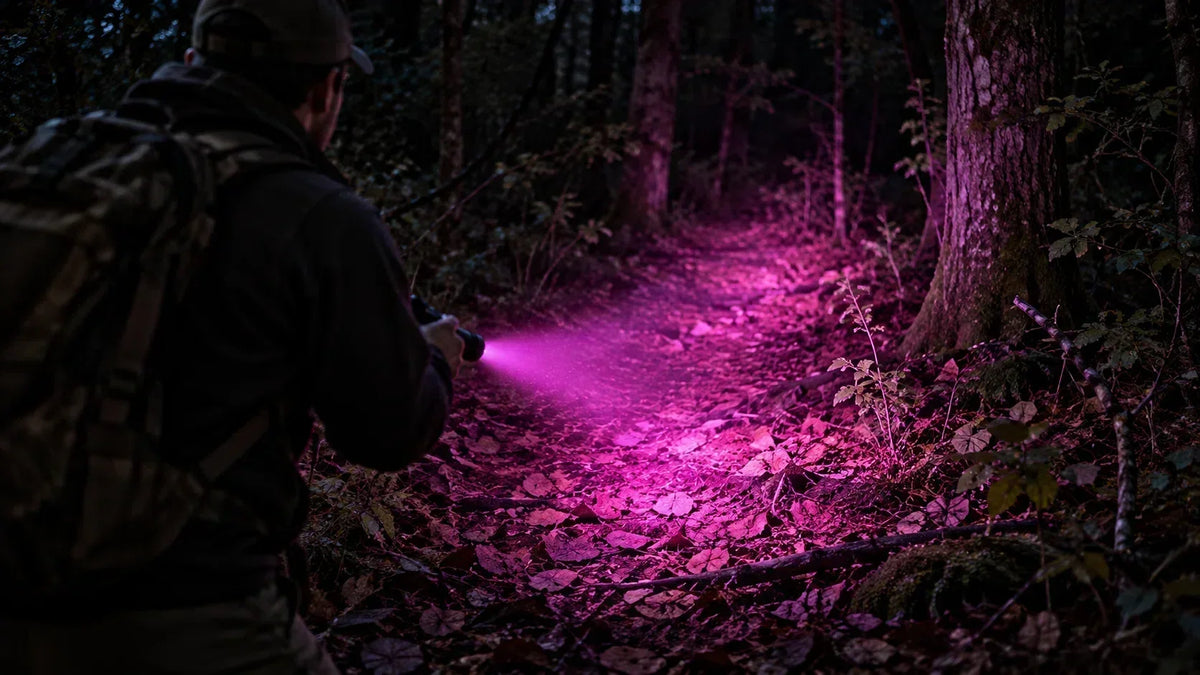
BLOOD TRACKING SERIES 07
Brightness matters—but the highest lumen number is not automatically the best choice for blood tracking.
Quick Answer
There is no single ideal lumen number for blood tracking.
Lumens describe the total light output of a flashlight, but they do not tell you how effectively subtle visual clues will stand out from leaves, soil or vegetation.
For tracking, usable output, optical design, beam pattern, distance and surface conditions all matter together.
A powerful light can help with wider-area searching, while lower output may be more comfortable and useful for close-range observation.

What Do Lumens Actually Tell You?
Lumens are a measure of light output.
Flashlight performance standards treat light output, beam distance, beam intensity and runtime as separate characteristics. That distinction matters because two flashlights with similar lumen ratings can produce very different beams and very different real-world viewing experiences.
ANSI/PLATO FL 1-2025 — Flashlight Basic Performance Standard
A lumen number can tell you how much light a flashlight produces.
It cannot tell you by itself:
- how concentrated the beam is,
- how far the useful beam reaches,
- how the light interacts with different surfaces,
- or how much visual contrast a tracking system can create.
That is why lumens should be treated as one specification, not the entire answer.
When Does Higher Output Help?
Higher output can be useful when you need to scan a larger area or examine terrain at greater distance.
A brighter mode can help illuminate more ground and provide additional reach when the user is searching beyond close range.
This can be especially useful when moving between locations or checking a wider section of vegetation and terrain.
But that does not mean the highest mode should always be used.
Why Can Lower Output Be Useful?
At close range, excessive brightness can become distracting.
Wet vegetation, pale leaves and reflective surfaces may return strong highlights toward the viewer. When that happens, increasing output further may not make subtle details easier to distinguish.
A lower setting can sometimes provide a more comfortable view of nearby ground while preserving surface texture.
This is why multiple output levels are often more useful than a flashlight designed only around maximum brightness.
Beam Pattern Matters Too
A 1,000-lumen flood beam and a 1,000-lumen tightly focused beam can feel completely different in use.
One may illuminate a wide section of nearby ground.
The other may concentrate more light into a smaller area and provide greater reach.
For blood tracking, the useful beam depends on how far away you are searching and how much terrain you need to examine at once.
So when comparing flashlights, look at output and beam pattern together.
What About Optical Filtering?
Brightness does not replace optical design.
Different materials reflect and absorb light differently, and alternate-light research has shown that wavelength and background surface can substantially affect visual contrast.
Illuminating the benefits and limitations of forensic light sources
That means a brighter light does not automatically create better tracking contrast.
For the underlying optical principle, see BT-02 — How Does a Blood Tracking Light Work?
So How Many Lumens Should You Choose?
Instead of searching for one perfect number, look for a flashlight that gives you enough output range for both wider searching and close observation.
A practical tracking light should let the user adapt brightness to the distance and environment rather than forcing one output level for every situation.
That flexibility is more useful than simply choosing the largest lumen figure on the specification sheet.
For the complete buying criteria, see BT-06 — How to Choose a Blood Tracking Flashlight.

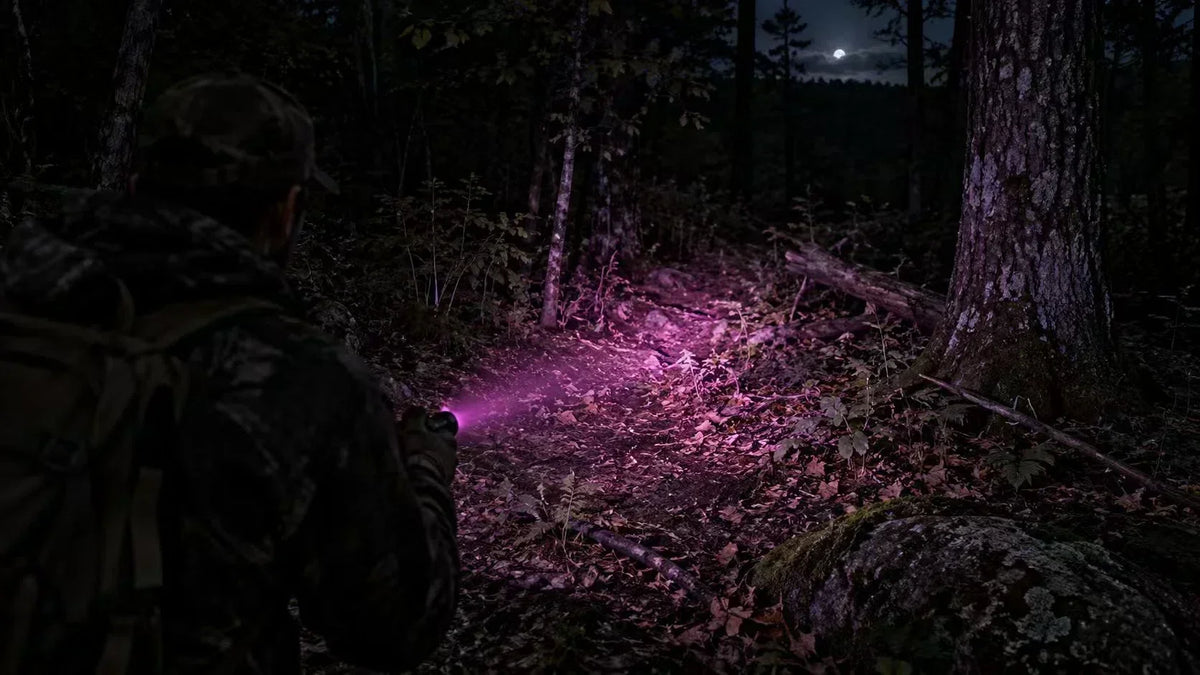
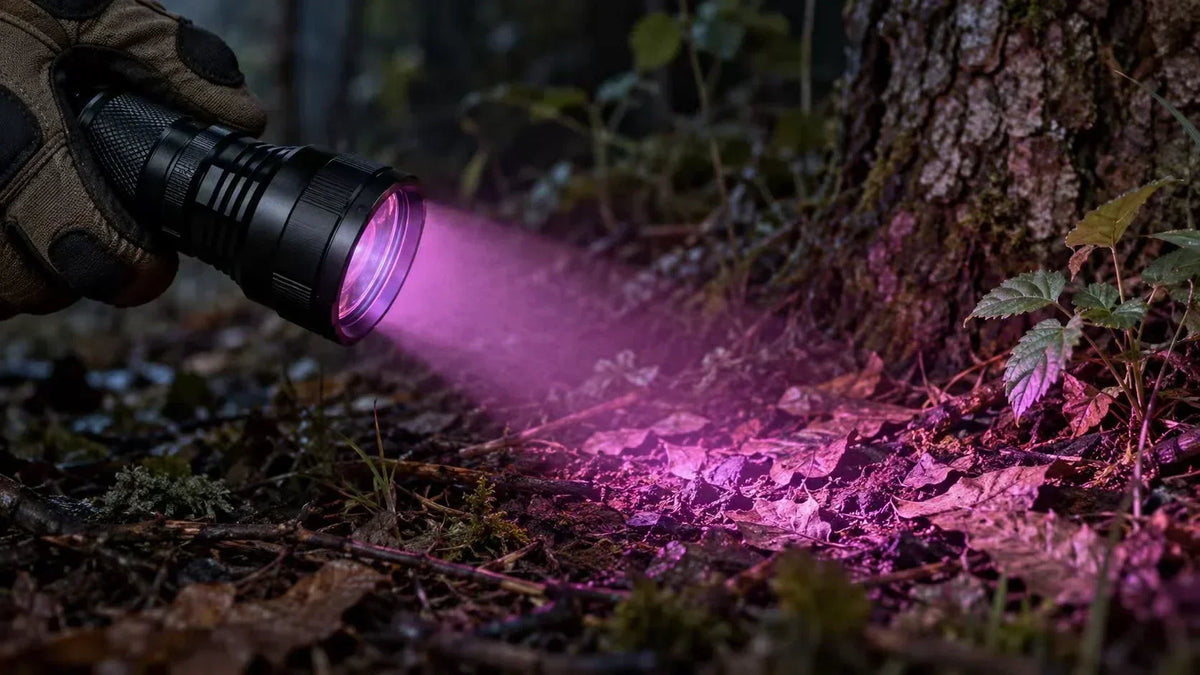
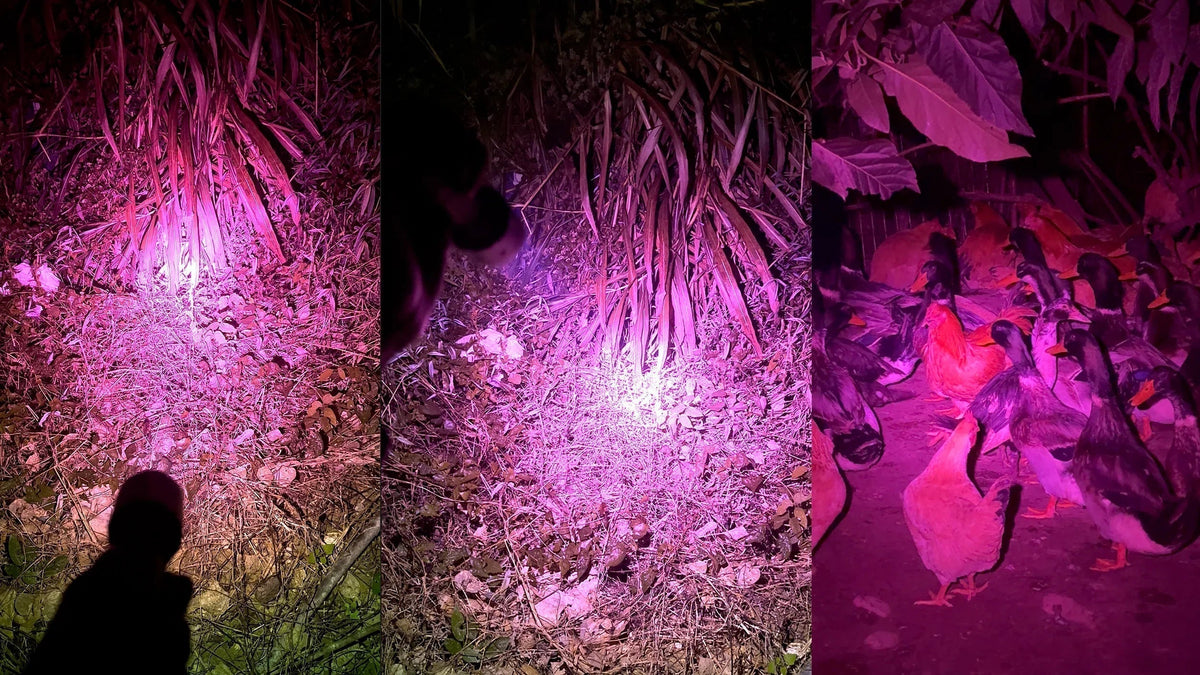
FIELDLUME B1 Blood Tracking Light
The FIELDLUME B1 Blood Tracking Light 1800LM uses three output levels:
Low 30% → High 80% → Turbo 100%
This allows lower-output close-range observation as well as higher-output wider-area scanning, while the custom optical filter handles the tracking-specific contrast function. The B1 also uses a replaceable 21700 6000mAh rechargeable battery for extended field use.
VIEW THE B1 BLOOD TRACKING LIGHT

Share: