


BLOOD TRACKING SERIES 02
How selected light, optical filtering and visual contrast work together to support low-light tracking.
Quick Answer
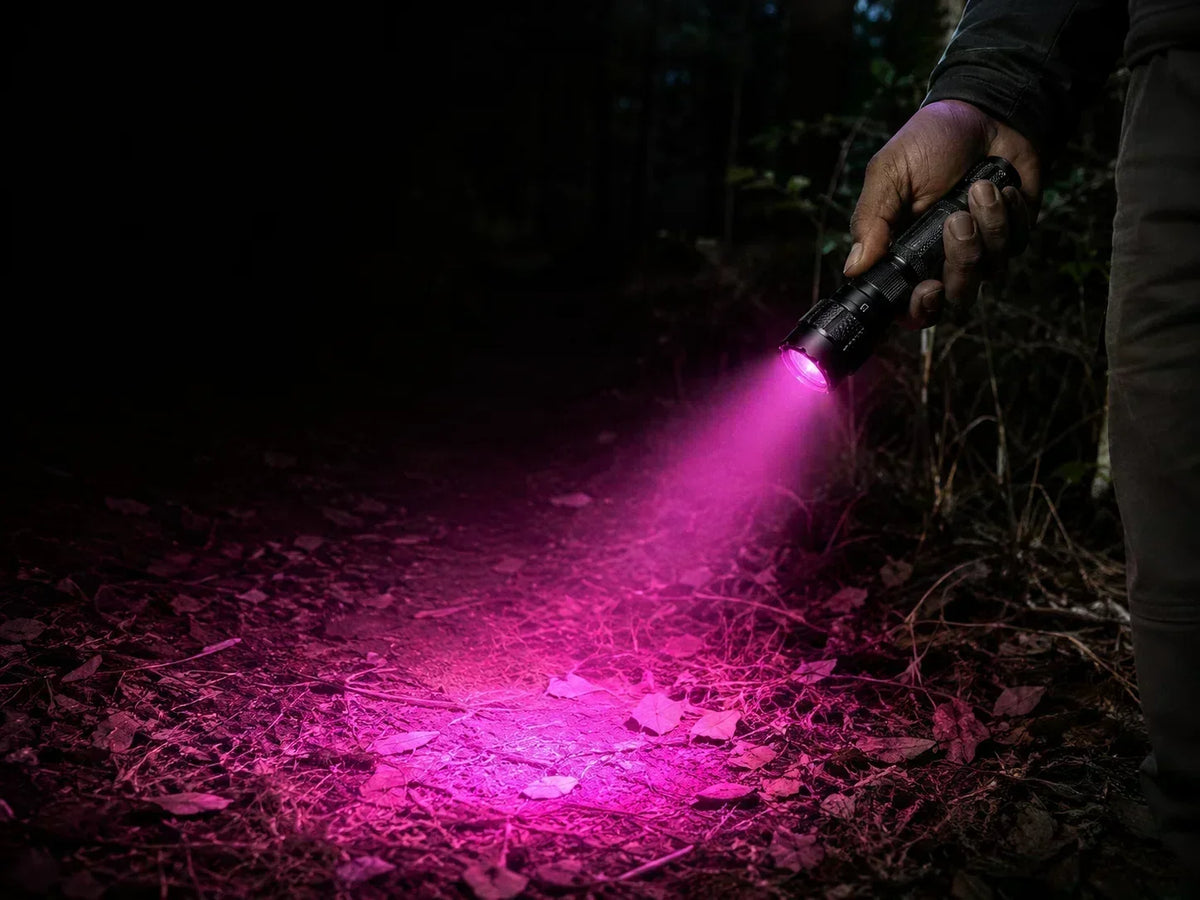
A blood tracking light works by changing how different colors and surfaces appear under illumination.
Instead of relying on brightness alone, the light may use selected wavelengths, optical filtering or multiple light sources to alter the visual contrast between a possible trail indicator and the surrounding leaves, soil, bark or vegetation.
The goal is not to “detect” a substance automatically. It is to give the user another way to see subtle differences that may be difficult to notice under normal white light.
New to tracking lights? Start with BT-01 — What Is a Blood Tracking Light?
Why Does Contrast Matter?
Human vision does not judge visibility by brightness alone.
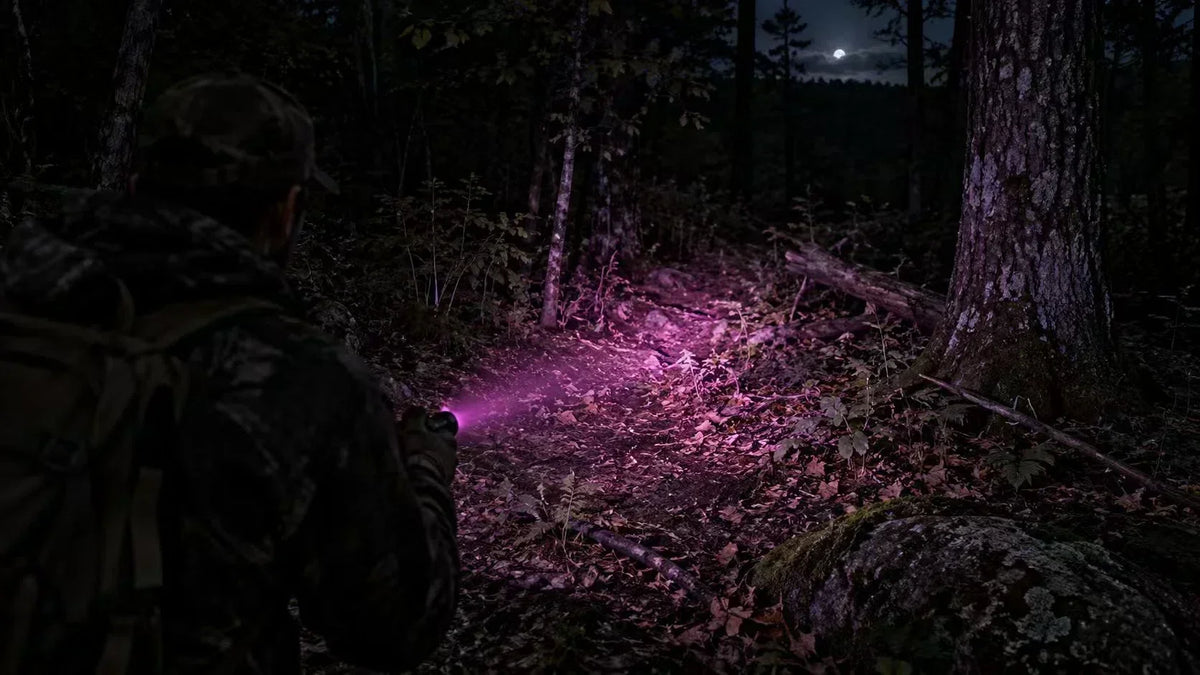
A small visual clue can be difficult to notice when it has a similar brightness or color to the background around it. In woodland environments, brown leaves, green vegetation, dark soil, moisture and shadows can all reduce useful separation.
A tracking light attempts to change that relationship.
If one surface reflects more of the selected light while another absorbs more, the difference between them may become easier to see.
That difference is visual contrast.
This is why a more powerful flashlight does not automatically provide better tracking visibility. More light can improve general illumination, but useful contrast depends on the light, the surface and the surrounding conditions together.

How Do Selected Wavelengths Affect What You See?
Different materials interact with light in different ways.
Some wavelengths are reflected strongly by a surface, while others are absorbed more strongly. Changing the spectral characteristics of the light can therefore change how bright or dark different parts of the scene appear relative to one another.
Forensic research with alternate light sources uses the same broad optical principle: different wavelengths can affect the visibility of stains, but the result also depends heavily on the material underneath them.
That is an important limitation.
There is no responsible reason to claim that one wavelength will always work best on every leaf, rock, soil type or surface.
What Does Optical Filtering Do?
An optical filter changes which parts of the light spectrum are emphasized or reduced.
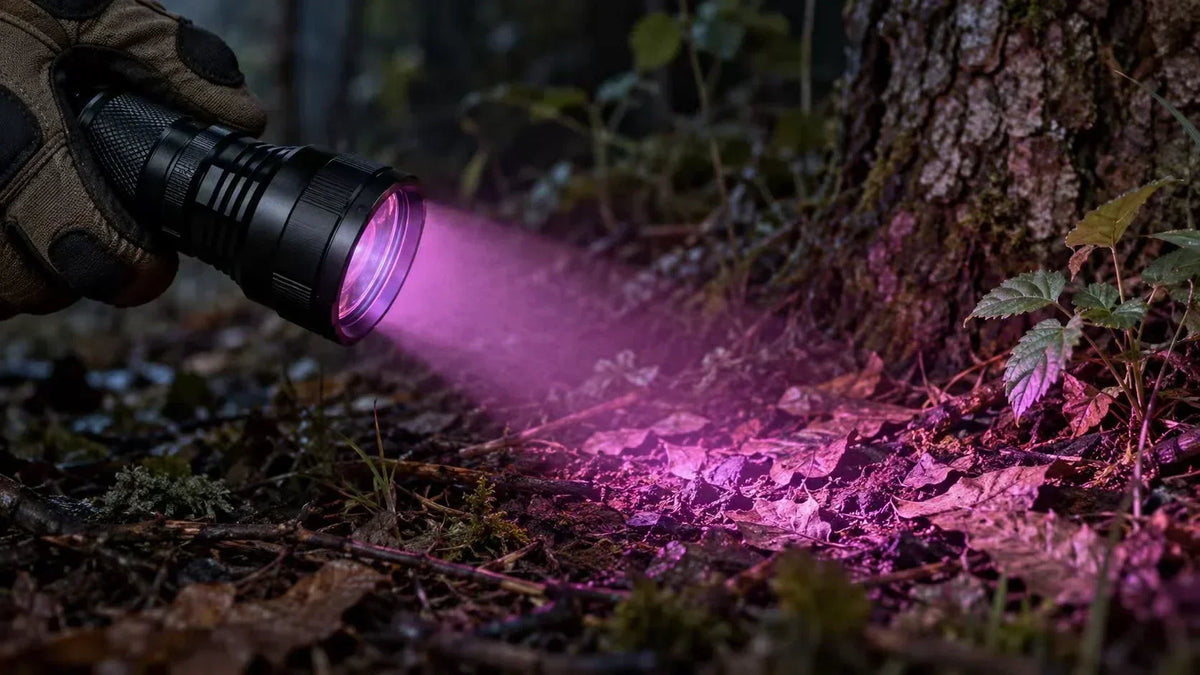
In a tracking flashlight, filtering can help shape the light reaching the scene so that certain visual differences become easier to notice.
The purpose is not simply to make the beam look unusual.
A useful filter is part of the optical system, working together with the light source, beam pattern and viewing conditions.
This is why two lights with similar lumen ratings can produce very different visual results.
We will examine optical filters in much greater detail in Blood Tracking Series 09.

Does More Lumens Mean Better Tracking?
Not necessarily.
Lumens describe total light output. They do not tell you how well a particular trail indicator will stand out from a particular background.
A very bright beam can be useful for navigation and searching a larger area, but it may also create glare from wet leaves, pale surfaces or reflective vegetation.
For tracking, the better question is:
Does the light help you distinguish useful visual information from the background?
Brightness still matters, but it is only one part of the system.
Why Do Results Change in the Field?
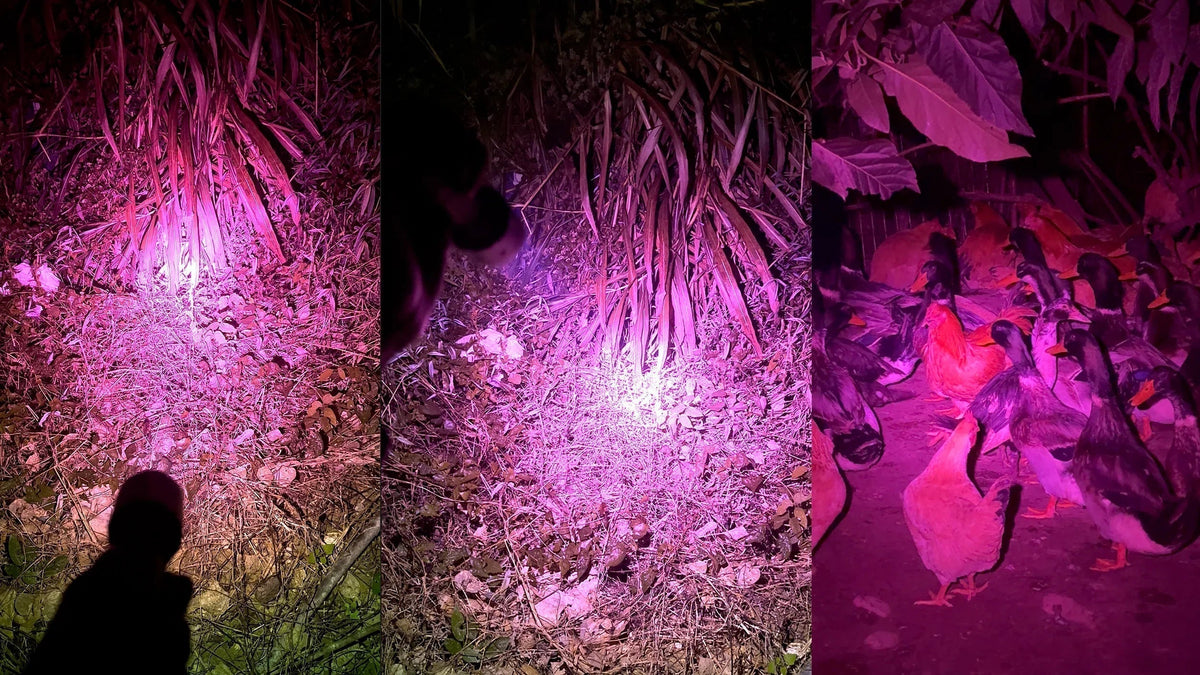
Real outdoor conditions are complex.
Visibility can change with:
- wet or dry surfaces,
- leaf color,
- soil type,
- ambient light,
- beam angle,
- distance,
- moisture,
- and the condition of the trail itself.
That is why a blood tracking light should be treated as a visual aid rather than a guaranteed detector.
Good equipment can support observation, but field conditions still matter.
FIELDLUME Blood Tracking Light
The FIELDLUME B1 Blood Tracking Light 1800LM combines high output with optical filter technology in a rechargeable outdoor platform.
Its design is intended to provide another visual tool for low-light tracking, while still offering the durability and handling expected from a field flashlight.
VIEW THE B1 BLOOD TRACKING LIGHT →

Share: