


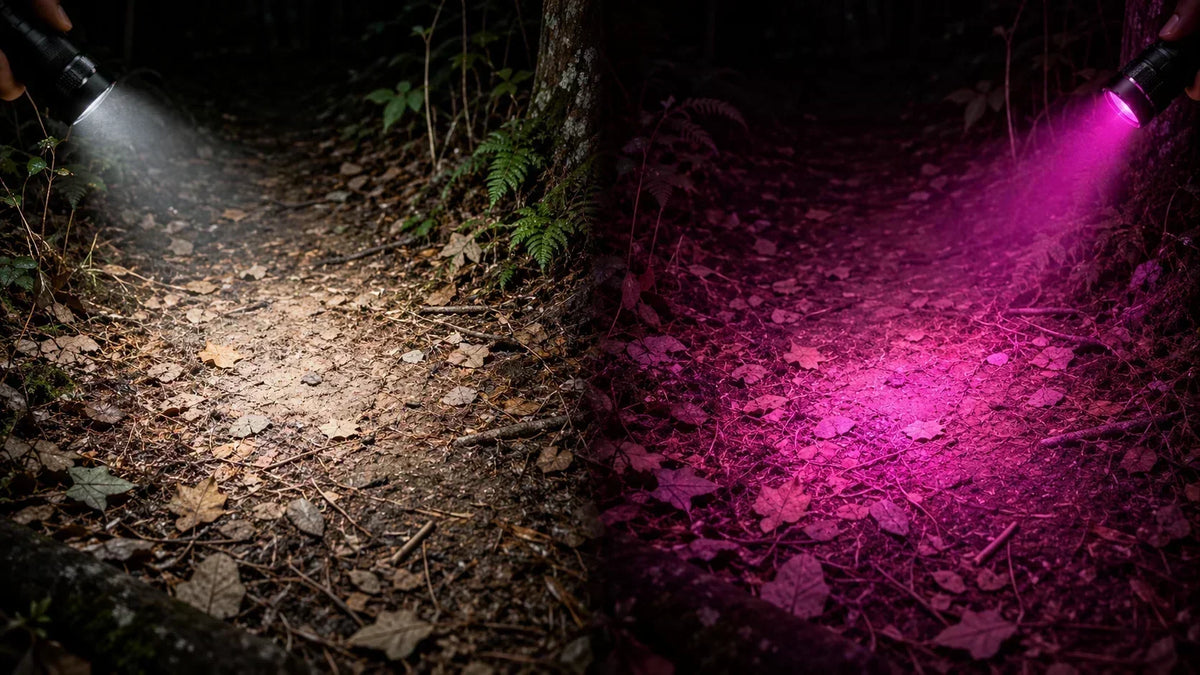
BLOOD TRACKING SERIES 05
A regular flashlight and a blood tracking light can both be useful after dark—but they are designed to solve different visual problems.
Quick Answer
A regular white flashlight is designed for general illumination. It helps you navigate, scan a wider area and see natural colors across the environment.
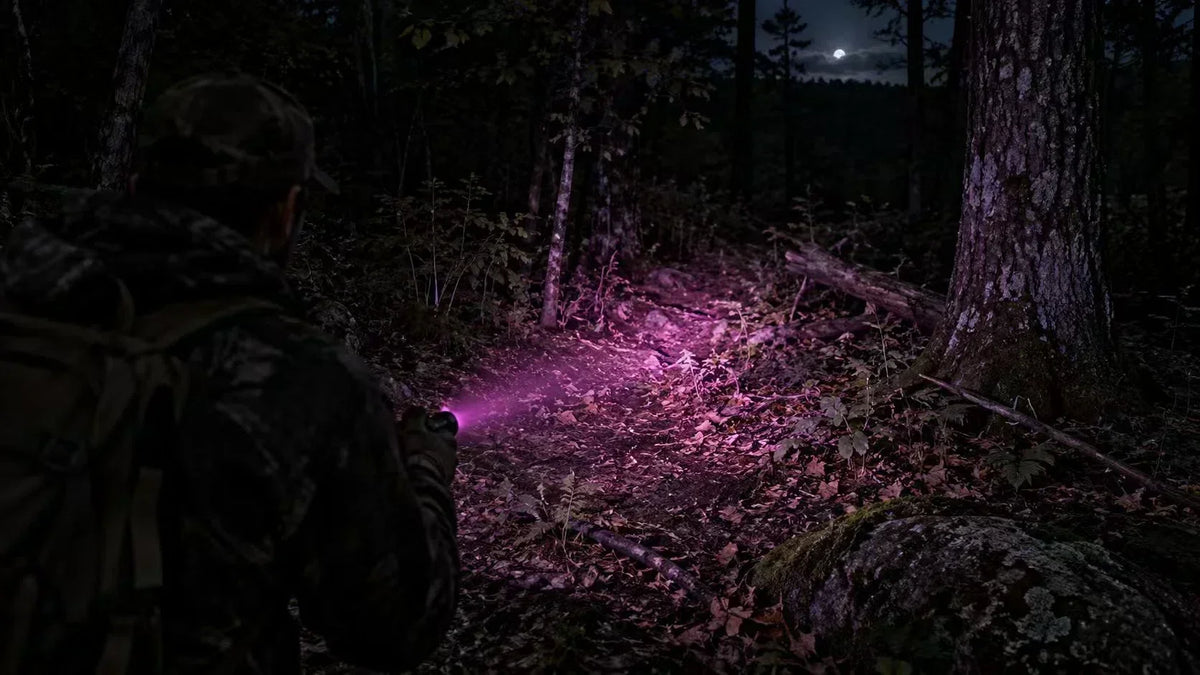
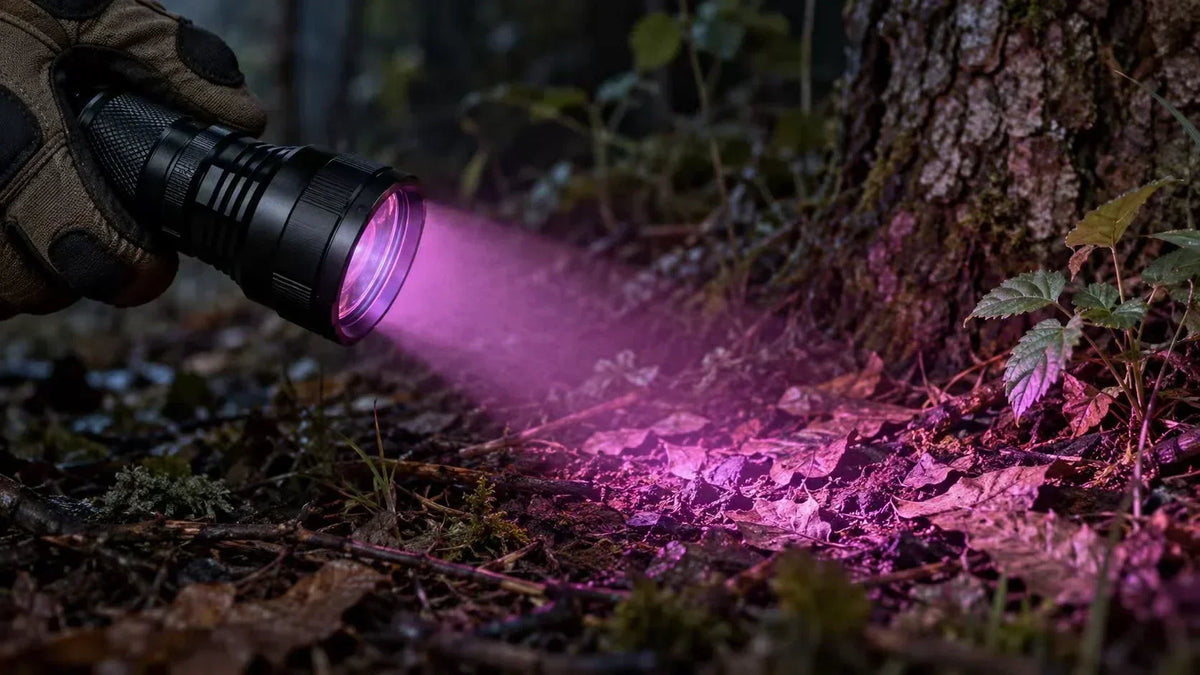
A blood tracking light is more specialized. It may use selected light or optical filtering to change visual contrast between subtle trail indicators and surrounding leaves, soil or vegetation.
Neither option is automatically better in every situation. In practice, the most useful light depends on what you are trying to see and the conditions around you.

What Does a Regular Flashlight Do Best?
White light is highly versatile.
It provides broad visibility, preserves familiar color relationships and makes it easier to move safely through uneven terrain. For general searching, navigation and identifying objects in the environment, a good white flashlight is often the most practical tool.
White light can also work well for tracking.
On some surfaces, natural color rendering may already provide enough separation for the user to notice subtle clues without specialized filtering.
That is why a blood tracking light should not be presented as a replacement for every white flashlight.
What Is Different About a Blood Tracking Light?
A tracking light focuses less on illuminating everything naturally and more on changing useful visual contrast.
Different surfaces reflect and absorb light differently. Selected illumination or optical filtering can alter how leaves, soil, bark and other materials appear relative to one another.
Forensic light-source research has similarly shown that wavelength and background material can significantly affect visual contrast.
In suitable conditions, this may make a small visual difference easier to notice.
For the optical principles behind this effect, see BT-02 — How Does a Blood Tracking Light Work?
What About Glare and Reflections?
Brightness can help—but more brightness is not always more useful.
At close range, wet leaves, pale vegetation or reflective surfaces can return strong white highlights to the eye. This can make subtle differences harder to distinguish.
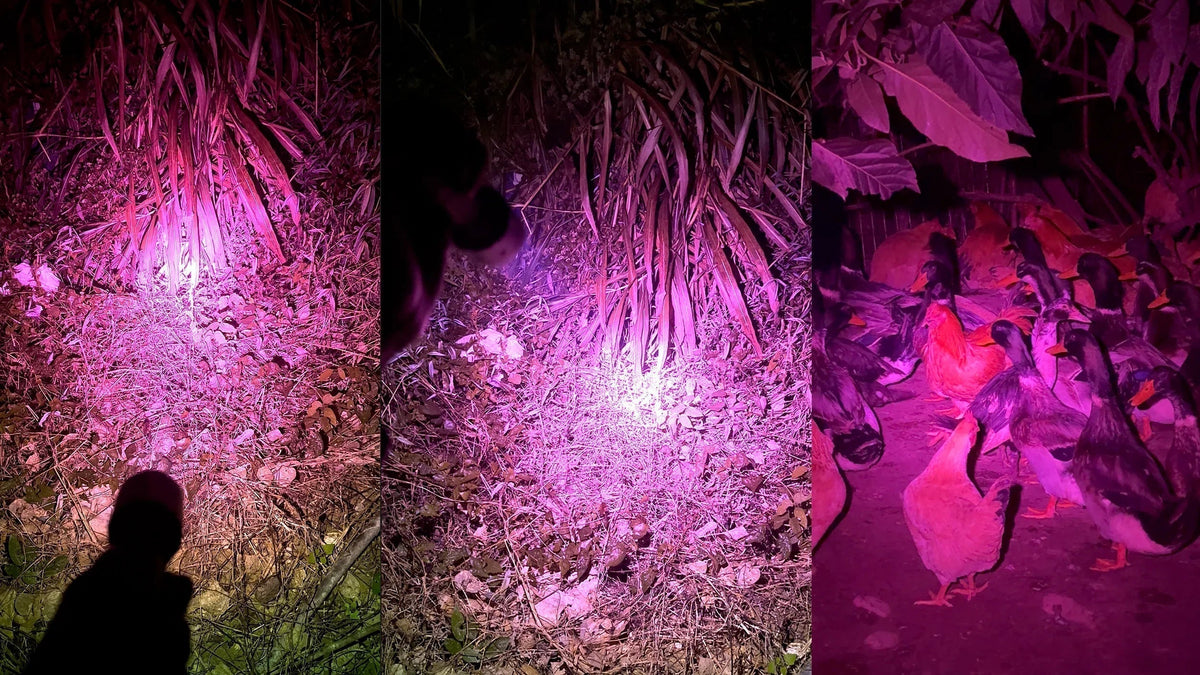
Filtered illumination may reduce some distracting reflections and provide a different way to examine the same surface.
The important word is may.
Surface type, moisture, beam intensity and viewing angle all affect the result.
Studies using alternate light sources have also found that contrast can change substantially depending on both wavelength and the surface being examined.
White Light vs Blood Tracking Light — Real Field Comparison
Side-by-Side Comparison
| Feature | Regular White Flashlight | Blood Tracking Light |
|---|---|---|
| Main purpose | General illumination | Low-light tracking assistance |
| Natural colors | Strong | May be altered by filtering |
| Navigation | Excellent | More specialized |
| Visual contrast | Depends on surface | Designed around useful contrast |
| Glare | Can increase on reflective surfaces | May reduce some distracting reflections |
| Works everywhere? | No | No |

Do You Need Both?
For many users, the most practical answer may be yes.
White light is useful for moving through the environment and conducting a broad search. A specialized tracking light gives the user an additional visual option when white illumination does not provide enough contrast.
They are not necessarily competing tools.
They can complement each other.
FIELDLUME B1 Blood Tracking Light
The FIELDLUME B1 Blood Tracking Light 1800LM uses custom optical filtering to provide a purpose-built tracking beam for low-light observation.
It is designed to complement general white-light illumination by offering another way to examine vegetation, soil and leaf litter when contrast is difficult to read.
VIEW THE B1 BLOOD TRACKING LIGHT

Share: